
This blog post is a supplementary addition to an article we wrote in collaboration with AICHE’s Chemical Engineering Progress Magazine, for their May 2026 special issue on climate solutions. Read this post for a more indepth treatment of the data along with actionable insights for teams scaling technology today, and grab your edition of CEP Magazine here for a higher level analysis of the bioeconomy “eras” and what it means for the path to commercial scale.
The circular bioeconomy has been "almost there" for a long time.
Since the 1970s, the industry has cycled through genuine frontiers, moving through fermentation for fuels, platform chemicals, and advanced biorefineries. Each era brought real capital and real talent, and each one ran into a similar wall.
Next Rung has been part of that story for over 20 years, across cellulosic conversion, fermentation, platform chemicals, and more. What we've taken from that experience isn't just a set of stories, but a dataset.
The startup world now has a name for this kind of work: tough tech. It's how they describe science and engineering that can't be validated in a lab or shortcut by software. We’ve been doing it for 25 years, before it had a name, and long enough to notice that the same problems keep showing up, regardless of the technology or the team behind it.
What the data actually shows
Our dataset analysed data from circular bioeconomy projects over the span of two decades, and eight challenges show up with striking consistency. Four of them appeared in more than 75% of all programs reviewed:
Water and waste management;
High-solids operations;
Equipment wear and fouling;
And market acceptance.
These aren't obscure edge cases. They're the heavy walls of scale-up, and they tend to be underestimated most often.
A process that handles solids cleanly in a lab behaves very differently at commercial volumes. A facility managing a few liters of wastewater per day faces a completely different challenge when that volume becomes thousands of gallons.
The other four — feedstock variability, yield performance, contamination control, and product purity — each showed up in more than half of all programs. The gap between how a process performs in a controlled lab and how it performs under real operating conditions is almost always bigger than expected.
The good news is that most of these challenges are now well understood, and teams that go looking for them early do significantly better than those that run into them mid-commissioning.
When the science works but the business doesn't
Technical success and commercial success are not the same thing, and confusing them has hurt more programs than it should have.
A pattern we've seen repeatedly: a company builds something brilliant at lab scale, then puts the scientist who built it in charge of scaling it up. That logic seems reasonable, since that person knows the tech better than anyone. But building a commercial facility requires a completely different skill set than developing the technology inside it.
Several facilities in our dataset made real technical progress and still couldn't compete commercially, because the economics of the full system just didn't add up.
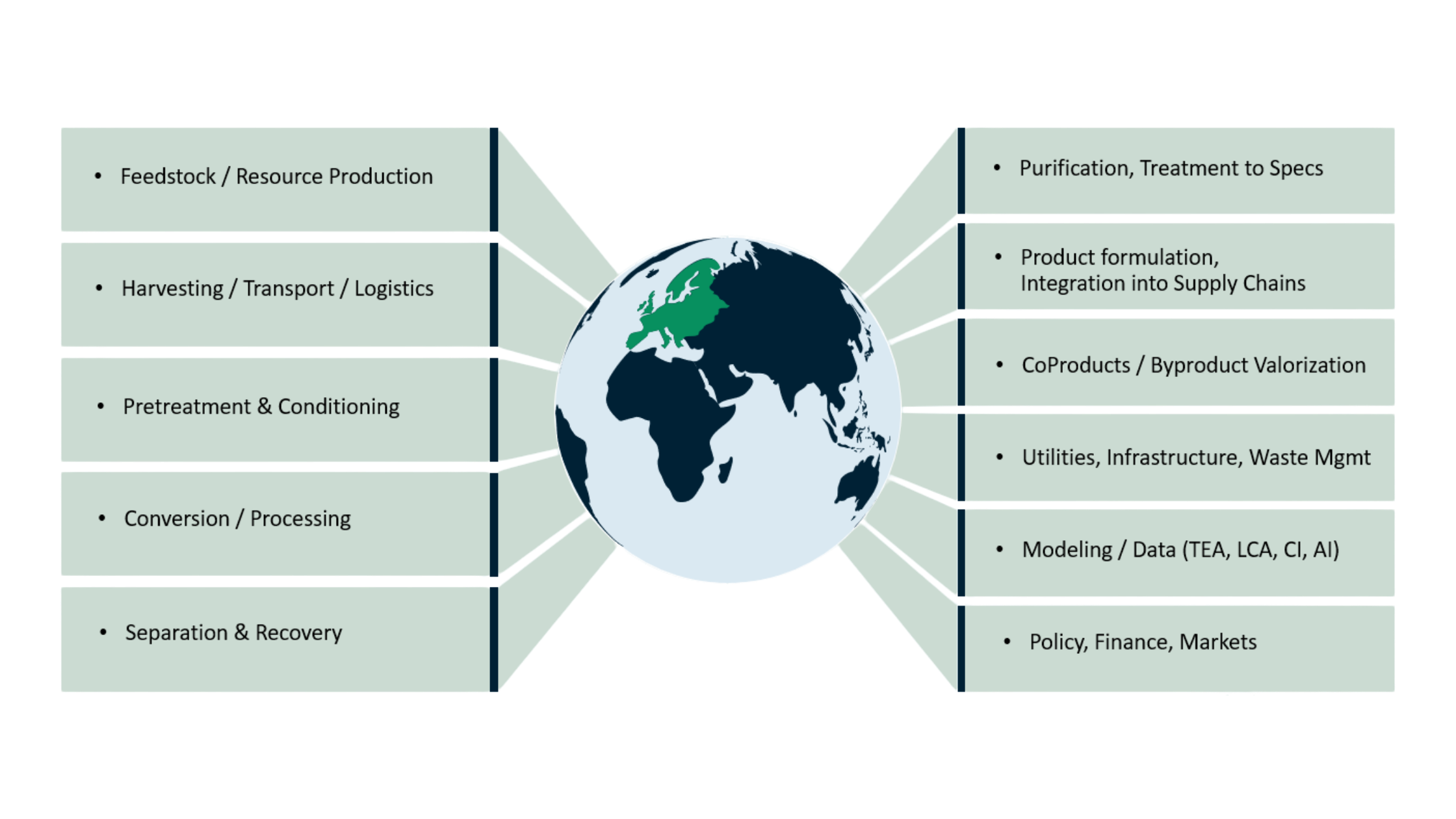
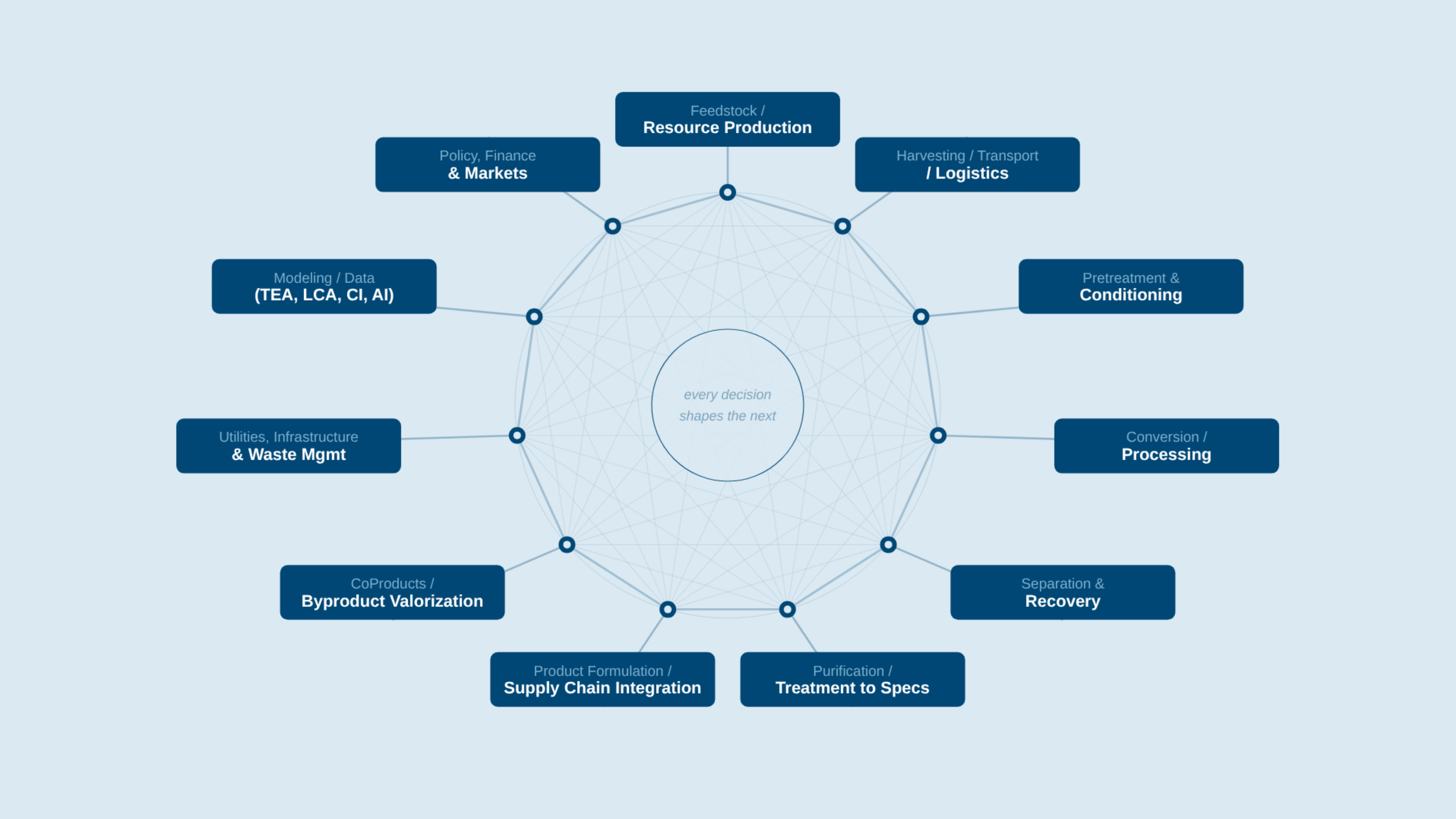
Feedstock choices affect how you process materials, and processing affects how you separate and recover your product. Every layer influences the others, and a weak link anywhere can unravel the financial case for an otherwise well-built facility.
This is why a techno-economic analysis (TEA) is done early, with honest assumptions based on realistic commercial scale operating conditions, are so valuable. A good TEA shows you where the financial risk lives before you build, while one based on ideal lab conditions can give you false confidence at exactly the wrong moment.
How the best programs are approaching this now
The teams best positioned to succeed today share a few things in common.
For starters, they treat their pilot plant as a learning investment, not just a production facility. First-of-a-kind plants generate data and process insights that reduce risk for every project that follows, and teams that build with that in mind get far more value out of the investment.
They’re also looking at the full picture all at once. Improving one part of a process in isolation often leaves the overall economics unchanged. What matters is whether the gains show up in the bottom line across the whole system.
But seeing that full picture requires more than good instincts. Successful teams model their way through uncertainty before making expensive decisions. Techno-economic analysis, cost modelling, and sensitivity testing are not just tools for investor presentations, these are the most efficient ways to connect engineering choices to real financial outcomes early enough to act on them.
Finally, they look for ways to share infrastructure rather than build everything from scratch. Co-locating with existing industrial facilities reduces capital requirements, and shared demonstration platforms make early-stage scale-up more viable. These aren't shortcuts, they're practical responses to what the data consistently shows.
Progress made. Work remaining.
Five decades of bioeconomy deployment have produced a clear picture of where the problems concentrate and what it takes to solve them. Feedstock strategies, conversion processes, and modelling tools have all advanced, but what hasn't changed is the core requirement.
Every layer of the system has to work together, and the economics have to stand on their own without relying on policy support or pricing premiums that may not last.
The teams that succeed will be the ones who prepare properly before the pressure is on, not after. And fortunately, we've been in these deployments long enough to know where the hard parts are.
If you want a team that already knows the terrain, get in touch!
