5 Reasons to Have an On-Site Engineering and Consulting Partner
The people preparing your Techno-Economic Analysis (TEA) and Life Cycle Analysis (LCA) should have direct experience designing, building, and operating facilities at every stage of commercialization.Similarly, detailed design done by engineers who understand what it means to be inside a plant (in other words, to turn a valve) will always produce better outcomes.
Many technology teams treat on-site support as a contingency for when things go wrong. However, the most successful commercialization programs we have seen treat field capability as a core part of the plan from the start.
This can look like confirming construction and installation details, developing operating procedures, supporting commissioning and startup, and assessing bottlenecks and process improvement opportunities. At Next Rung, we provide this on-site support to approximately 50% of our client base through the Navigator program. Here are five reasons why.
1. Unplanned events don't wait for the next Zoom call.
When a system is live and something goes wrong, you need someone in the room.
Equipment installed incorrectly, software issues that need troubleshooting, an unexpected event that needs to be handled in seconds rather than hours. None of these are hypothetical scenarios. Our team has seen them happen on real projects and knows the steps to prevent them and limit their impact when they occur.
Bringing an engineering partner on-site means having someone who understands how a system is supposed to behave and can plan for what it might do instead. They are not a substitute for the owner's team, but a complement to it.
When something unexpected surfaces, a correct diagnosis in real time can be the difference between a non-issue, a major stumbling block, or equipment damage that sets the timeline back by weeks. While we provide remote support as well, for startup activities there is little substitute for having experienced hands on site. Someone working from photos and descriptions of a problem they cannot see will always be at a disadvantage, and that delay has a cost.
A well-handled problem often disappears before it becomes a story. While the team moves on, the risk has been identified, addressed, and documented to inform future prevention. That invisibility is not a gap in credit, but a testament to good on-site support.
2. What clients see and what exists on-site can be two different things
This is one of the more consistent patterns in scaleup work. Founders and technical leads describe their facility based on what they intended to build, or what they've grown accustomed to as scientists, academics, or engineers with minimal field experience. When an outside team walks the site, they see it fresh.
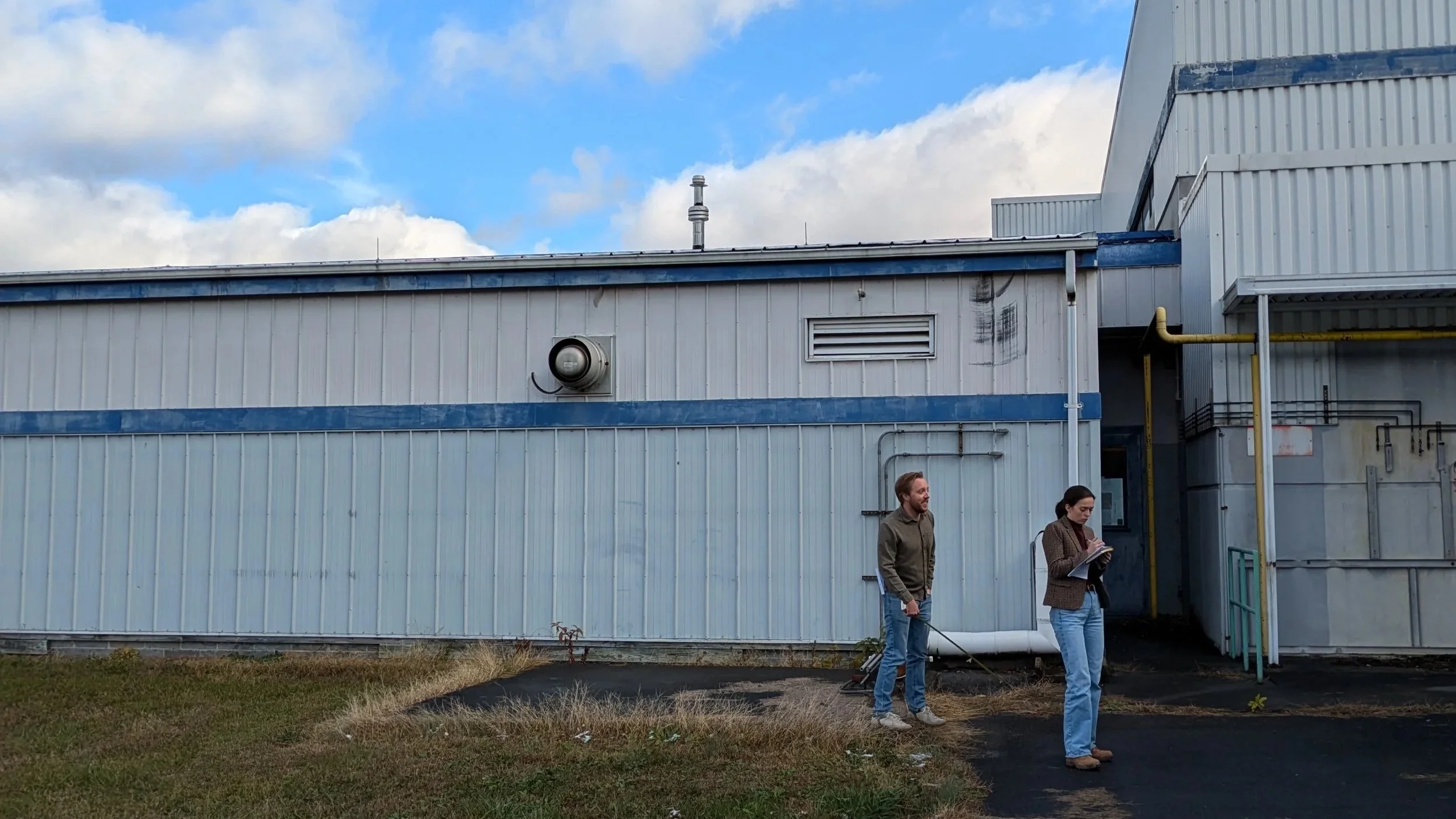
We have visited clients who were convinced their facility wasn't ready, only to find they were actually more prepared than anyone gave them credit for. In other cases, we found gaps between what was described beforehand and the reality of the site. This can look like missing utilities, foundations that can't support incoming equipment, or safety standards that need addressing before moving ahead.
Structured gap analyses are one of the most reliable tools for finding these problems before they cost anything, and they work best when someone is physically present to observe how a team actually operates.
At one client site, a single on-site gap analysis surfaced nearly 40 distinct issues. One of them was critical inventory management: materials needed for each pre-pilot run were not being tracked consistently, which created real risk of delays and batch variability. Working through that list together before the first run meant it became a solvable problem rather than one discovered mid-run.
3. Solutions come together better (and faster) in person.
Frequently in scale-up projects, someone has to tell a founder that a process assumption doesn't hold at scale, the facility isn't ready, or the timeline needs to shift. That conversation goes differently in person.
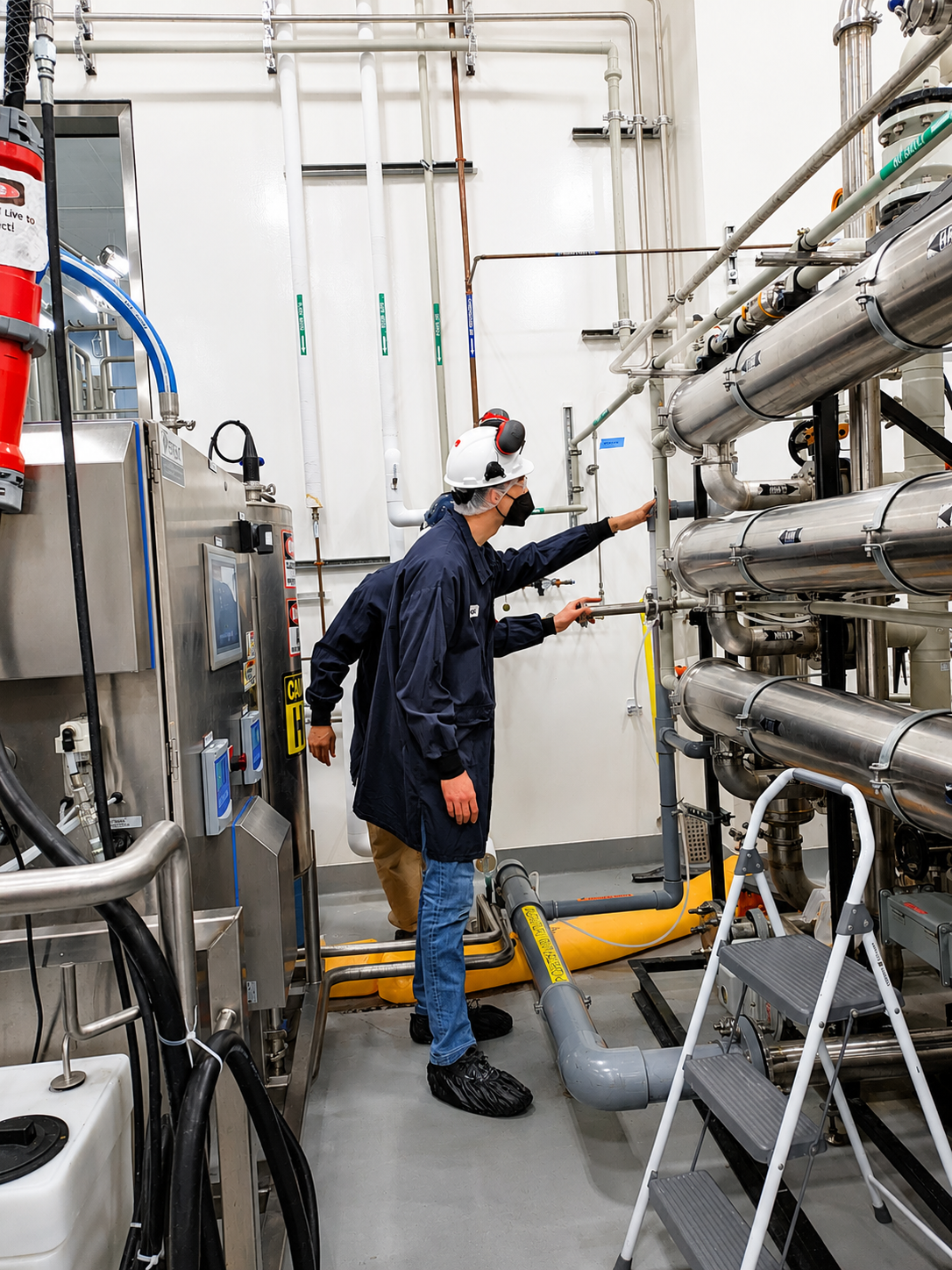
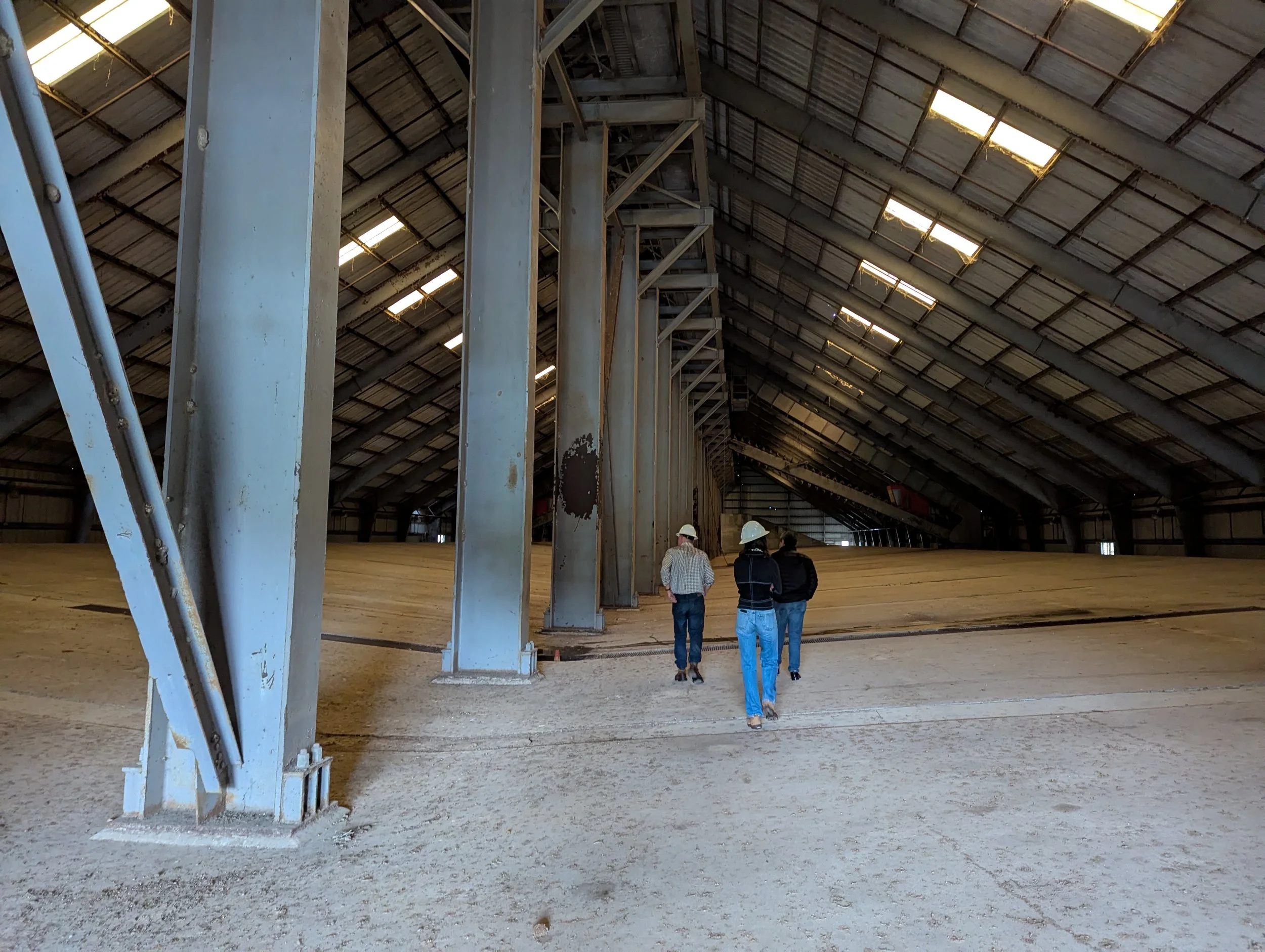
You can walk a facility, skid, or individual asset, evaluate its performance and condition in real time, and point out exactly what issues and concerns demand attention. You can answer questions as they come up, read the room, and find the framing that helps rather than discourages. A written finding can feel like a verdict, whereas the same finding explained at a whiteboard with the client standing next to you becomes a problem with a solution and a clear path forward.
We often hear from clients that Next Rung is the only engineering and consulting firm that gets its hands dirty. That reputation isn't built on deliverables alone, but on the kind of shared presence that makes hard conversations possible in the first place, while ensuring they lead to aligned, practical paths forward.
4. On-site work leaves something behind
A well-structured TEA builds confidence. A clean FEL-1 package demonstrates rigor. But something different happens when an engineer rolls up their sleeves next to your team and works through a problem in real time.
One of our clients reached out directly to our President to tell him that one of our engineers had become, in their words, an integral part of their team. That didn't come from a deliverable. It came from weeks of shared problem-solving on-site, from someone showing up and contributing rather than advising from a distance.
That presence also offers something more tangible. Newer engineers on a client's staff get to work alongside people who have seen the same problems play out across dozens of projects, and they leave the engagement more capable than when it started.
The best version of an on-site visit is one where the client no longer needs us to catch the same things next time.
5. It completes the loop on what engineering consulting should be.
We build TEAs, FEL studies, process models, and vendor shortlists. That work is valuable, but it's incomplete if the team that generated it never finds out whether the recommendations hold up when someone tries to implement them. Going on-site closes that loop.
It tells us where our assumptions were right and where the real friction lives. It also means our clients don't just receive a plan, they get a partner who has seen it through.Every engagement looks different, but on-site work is most useful before you need it. Having an engineering and consulting partner with proven, applicable experience means you're not just getting advice, but execution on the ground, where and when it counts.
If you're approaching that stage, we're happy to talk through what it could look like for your process.
Ready for your free consultation? Let’s talk!
The earlier we start the conversation, the stronger your foundation will be.
Fill out the form below to get started.
